I sat in my car after another conversation that went nowhere. You know the kind—where no one’s wrong, but nothing is right. Where love is there, but so is that quiet, nagging voice whispering, this isn’t it.
I had everything I was supposed to want. A good relationship. A good life. Nothing catastrophic had happened. No one had cheated, no one had broken trust. It was fine.
But fine isn’t enough.
And leaving something that isn’t overtly bad? That’s its own kind of heartbreak.
I had done this before—walked away from good relationships, knowing in my bones they weren’t the right ones. And every time, it was so damn hard. Because what do you say when there’s nothing tangible to blame? How do you explain that you’re leaving, not because you’re unhappy, but because you know you’re meant for something more?
And this is where the real battle happens—not with other people, but within yourself.
Because when nothing is wrong, you start gaslighting yourself. You tell yourself you should be grateful. That you’re expecting too much. That leaving something “good” makes you reckless, ungrateful, or impossible to satisfy.
But here’s what I’ve learned: Gratitude and desire aren’t mutually exclusive. You can be thankful for something and still know it’s time to let it go.
And I had to let it go.
I took a deep breath, stared at the ceiling of my car, and whispered to myself: Starting over isn’t starting from nothing. It’s starting from experience.
And then, I left.

The Fear of Letting Go
We talk about starting over like it’s this devastating erasure of everything that came before. Like the second we walk away, we lose it all—time, effort, love, progress.
But that’s a lie.
The real fear isn’t starting over. The real fear is letting go of what no longer fits.
We cling to things, not because they’re right, but because they’re known. The familiarity of the wrong thing often feels safer than the uncertainty of the right one. We trick ourselves into believing that if we just hold on a little longer, fight a little harder, maybe—just maybe—it’ll get better.
But the bravest thing you can do? Walk away.
Because what got you here won’t get you there.
And I know that’s scary. I know it feels like standing at the edge of a cliff, staring into the unknown, waiting for some kind of sign that guarantees you won’t fall. But what if I told you that you’ve already built the parachute? That every single experience up until now has been equipping you for this exact moment?

Starting Over Is an Upgrade, Not a Downgrade
You’re not starting from scratch. You’re starting with clarity. You know what you don’t want. You know what doesn’t work. And if you really think about it, that’s everything.
I’ve had to remind myself of this over and over again. When I left relationships that were “fine” but not right. When I packed up my life and moved across the country with two bags and a pipe dream. When I walked away from things I had poured my heart into—not because they were failures, but because I had grown past them.
Each time, I wanted to cling to the comfort of what I knew. Each time, I worried about what people would think. Each time, I questioned if I was making the right decision.
And each time, I eventually realized: starting over didn’t erase what I had built—it expanded it.
Starting over isn’t a step back—it’s a step forward with better tools, sharper instincts, and a deeper understanding of who you are.
You don’t have to have all the answers. You just need the courage to take the first step.
Maybe that means finally leaving that relationship. Maybe it’s pivoting your career, even though it terrifies you. Maybe it’s simply admitting to yourself that the life you built isn’t actually the life you want.
Whatever it is, trust that you are capable of making it happen.
Because the truth is, most people don’t start over because they lack opportunity or ability. They don’t start over because they don’t think they deserve to. They convince themselves that they’ve made their bed, so they should just lie in it.
But you?
You’re not “most people.”
You’re allowed to choose again. You’re allowed to rewrite your story. You’re allowed to say, “This isn’t working for me,” without justifying it to anyone.
If you need permission, here it is:
You are not behind. You are not lost. You are not stuck.
You are standing on everything you’ve already built. And from here? The possibilities are limitless.
When I know it’s time to recalibrate—when I feel stuck, uninspired, or like I’m forcing myself to stay in something just because I’ve already invested in it—I come back to this process.

My “Start Over With Experience” Process
1. I Name What Isn’t Working
If I can’t admit what feels off, I can’t fix it. So I get brutally honest with myself. What in my life feels fine but not right? I write it down, say it out loud, or vent to a friend I trust. Whatever it takes to pull the truth to the surface.
2. I Release the Guilt
I remind myself: Leaving doesn’t mean I failed. It means I grew. I am allowed to walk away from things that no longer align—even if they once did. Even if they were good. Even if other people don’t understand.
3. I Take the Lesson, Leave the Rest
Not everything about the situation was wasted. I ask myself: What did this teach me? What do I want to carry forward? I take the wisdom, the skills, the clarity—and I let go of the weight.
4. I Make the First Move
I don’t need to map out the entire plan before I act. I just need to take the next right step. Have the hard conversation. Update my resume. Unfollow the person. Close the tab. Whatever it is, I just start.
5. I Trust That I’ll Land on My Feet
I remind myself: I’ve done hard things before. I survived. I learned. And this time? I’m not starting from nothing—I’m starting from experience.

This process has never led me wrong. Whenever I’ve felt like I was at a crossroads, staring at the unknown, wondering if I had it in me to start over—this is how I got through it.
Try it for yourself. If you’re feeling stuck, drained, or like you’re forcing something that just isn’t working, ask yourself:
“What if starting over isn’t failing—what if it’s the next right step?”
See where that thought takes you. Let it sit. Let yourself imagine what’s possible if you let go of what’s not.
And if something clicks—or if you’re still in the thick of it—let me know. I’d love to hear what’s coming up for you.
to the brave thing,
Cait

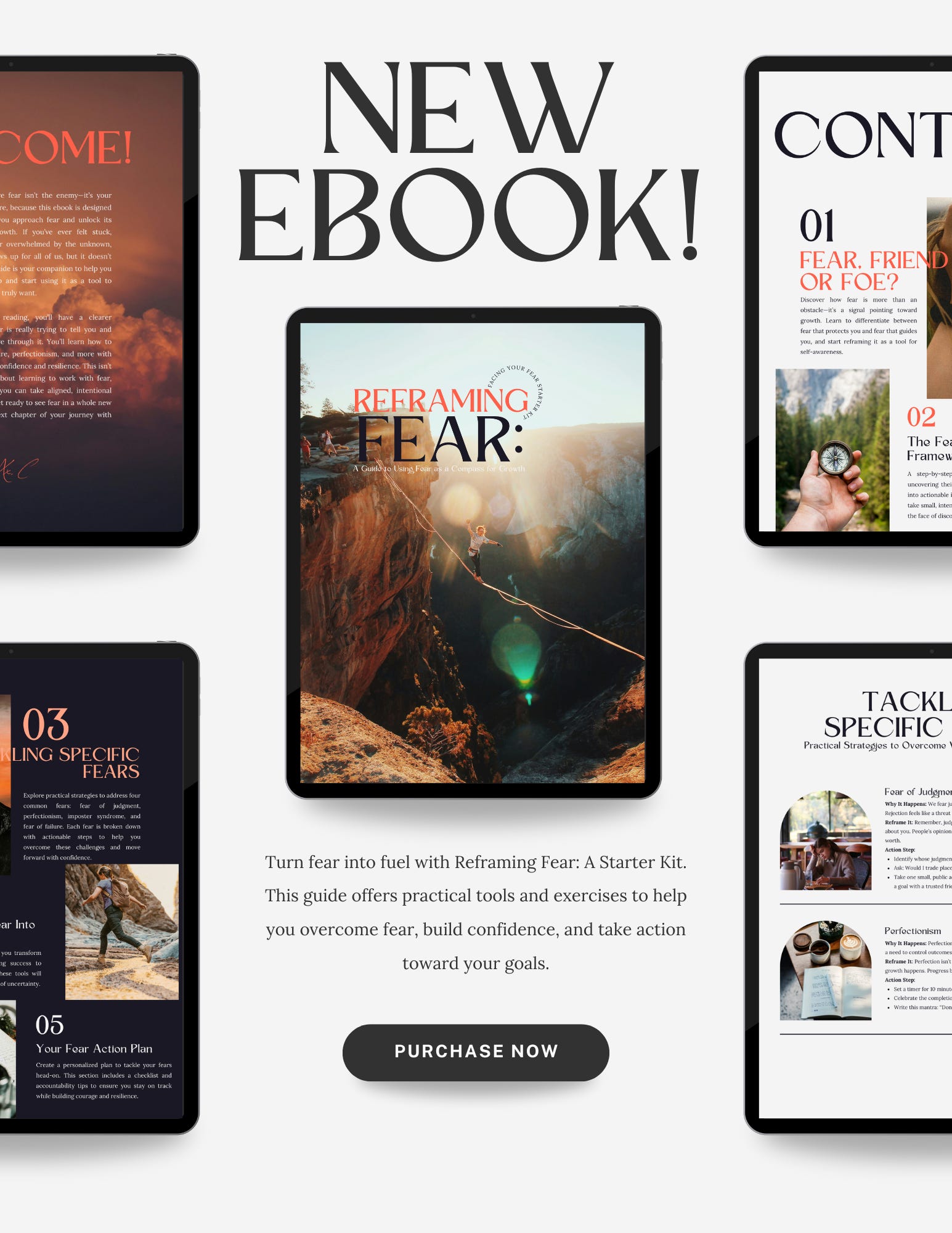
And in the meantime, there are some other really awesome reframing exercises in my new ebook: Reframing Fear