


It’s easy to think you’re doing the right thing when you shove down a bad day, slap on a smile, and keep moving. It’s praised in society—this ability to “focus on the positive” no matter what. But what if this mindset isn’t the strength you think it is? What if it’s quietly holding you back, disconnecting you from your own life, and eroding the foundation of your well-being?
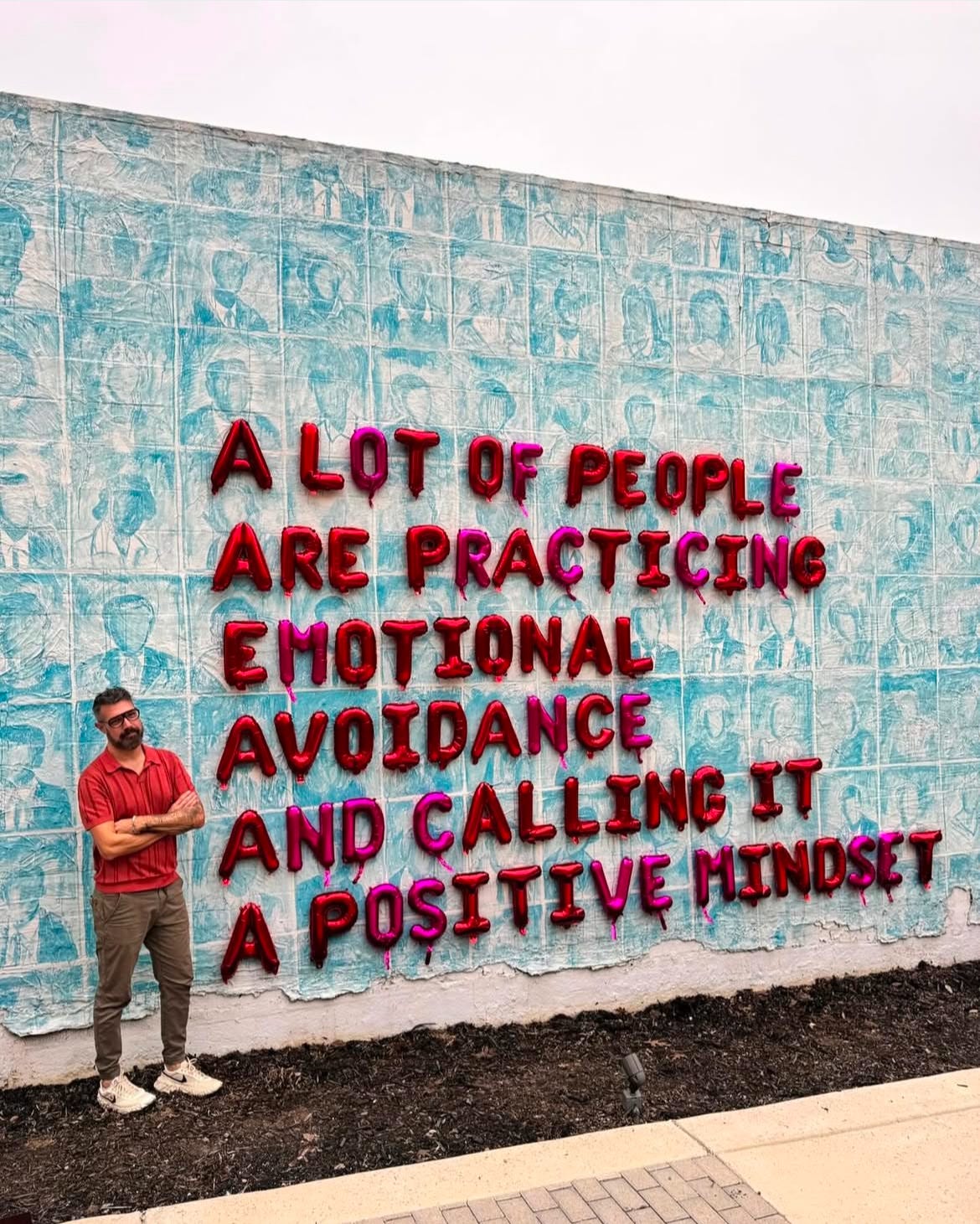
The Myth of "Positive Vibes Only"
We’ve all seen the social media mantras: Good vibes only. Focus on the good. Manifestation requires positivity. At first glance, these seem harmless—even encouraging. Who doesn’t want to feel good? But here’s the thing: emotional avoidance can wear a mask that looks a lot like a positive mindset.
Instead of being “positive,” what we’re often doing is bypassing discomfort. Instead of processing pain, we shove it into a dark corner of our mind labeled not now. And in doing so, we deny ourselves the fullness of our human experience.
Research supports this idea. A study on experiential avoidance shows how suppressing negative thoughts and emotions is strongly correlated with heightened psychological symptoms such as anxiety, depression, and stress (Hayes et al., 1996). Emotional avoidance doesn’t eliminate the discomfort; it buries it alive, only for it to resurface in more insidious ways later.
What Emotional Avoidance Looks Like
Emotional avoidance doesn’t always look like running away from problems. Sometimes, it’s more subtle:
Over-focusing on gratitude: Instead of allowing yourself to feel disappointed, angry, or sad, you rush to find the silver lining.
Toxic positivity: Saying, “At least it’s not worse,” or, “Everything happens for a reason,” when someone opens up about their pain. Research into toxic positivity highlights how such responses can invalidate genuine emotions, causing guilt and shame (Neurolaunch, 2024).
Distraction disguised as productivity: Throwing yourself into work or hobbies to avoid sitting with uncomfortable emotions.
Skipping the 'why': When you feel discomfort, you immediately try to fix it without pausing to understand it.
On the surface, these all seem constructive. But they’re just different flavors of avoidance.
Why This Matters
Avoiding emotions isn’t neutral—it has consequences. It doesn’t make pain disappear; it stores it in the body and mind. Over time, those buried feelings grow heavier. Studies suggest that experiential avoidance can reduce cognitive flexibility, making it harder to adapt to stress and compounding anxiety over time (Hovrud et al., 2023).
Even worse, emotional avoidance creates a disconnect between you and yourself. If you don’t allow yourself to feel, how can you truly know what you need or want? How can you align with your values if you’re too busy stuffing down what’s inconvenient?
What True Positivity Looks Like
Here’s the truth: A positive mindset isn’t about ignoring the bad. It’s about integrating the whole. It’s about making room for all your emotions—joy, sadness, frustration, fear—and knowing that none of them define you.
True positivity asks for presence. It invites you to sit with discomfort, even when it feels unbearable, and let it teach you.
True positivity is courageous. It looks like holding space for your sadness without judgment.
True positivity is balanced. It recognizes that light can’t exist without shadow, and both are needed for growth.
A Practice to Shift From Avoidance to Awareness
If you’re ready to shift away from emotional avoidance and into a practice of awareness, here’s a simple exercise:
Pause and name the emotion. When something feels “off,” stop and identify what you’re feeling. Is it anger? Disappointment? Fear?
Give it space. Imagine the emotion is a guest at your table. Ask it why it showed up. Let it speak without judgment.
Journal it out. If it feels overwhelming, grab a notebook and write about what you’re feeling. Often, clarity comes through writing.
Find the need behind the feeling. Emotions often point to unmet needs. Ask yourself: What do I need right now? Support? Rest? Boundaries?
Honor the process. Remember, there’s no rush. Emotions ebb and flow naturally when you give them space.
The Power of Honest Feeling
True positivity isn’t about erasing your discomfort; it’s about honoring it. When you let yourself feel, you give yourself permission to heal. You build resilience, self-trust, and a deeper connection to who you are.
So the next time you catch yourself reaching for a “positive vibes only” moment, ask yourself: Am I leaning into my emotions, or am I running from them?
The magic isn’t in suppressing the storm. It’s in learning to dance with it.
to the brave thing,
Xx, Cait